
A few years ago, digital design was all about doing more effects, more colors, more layers, more everything. Every creator seemed to be shouting visually, hoping to grab attention in the noisy digital world. But in 2025, that chaos has started to quiet down. Now, design isn’t about being the loudest voice in the room; it’s about being the most intentional.
Minimalism, once considered cold and sterile, has found new energy. And motion from subtle animations to interactive elements has become the secret sauce of engagement. Together, they’ve formed an unexpected alliance shaping the next era of visual storytelling. The modern design philosophy can be summed up in one sentence: less clutter, more meaning.
This evolution is redefining how creators, brands, and designers build their digital identities. Let’s unpack what “minimalism meets motion” really means, and how modern tools like Canva are making these trends accessible to everyone, not just professional designers with big budgets.
The Shift Toward Design with Purpose
For the first time in years, audiences have started to crave calm. The constant bombardment of loud visuals and overloaded content has led to fatigue. As attention spans shorten, the role of design has changed: it must now communicate fast and feel effortless.
Minimalism answers this demand perfectly. By focusing on clarity, negative space, and essential elements, designers give viewers the breathing room to process information. In 2025, minimalism is no longer about stark white backgrounds or monotone color schemes, it’s about removing distractions so that motion and storytelling can take center stage.
Think of Apple’s product pages: clean layouts, soft animations, and controlled color palettes that guide your eye naturally. Or consider lifestyle brands using soft gradients and scrolling transitions not to dazzle, but to direct attention.
The lesson is clear: in a distracted digital world, simplicity is the new sophistication.
Motion as the Emotional Layer
Minimalism provides structure, but motion adds emotion. When applied thoughtfully, animation and movement guide the viewer’s attention, emphasize key messages, and create memorable experiences.
Subtle motion design such as a gently fading headline, an image sliding into frame, or a logo that breathes can make a static design feel alive. But the keyword is subtle. In 2025, designers are replacing flashy, exaggerated effects with micro-interactions, small moments of movement that feel human and intentional.
For instance:
- A portfolio website that uses soft hover animations to reveal artwork details.
- A mobile app that uses motion to confirm user actions, making digital experiences more tactile.
- A brand presentation that tells a story through paced transitions rather than overwhelming effects.
Motion design is no longer a luxury feature. It’s the language of engagement, a new grammar of movement that complements minimalist design rather than competes with it.
Tools That Make Modern Design Accessible
In the past, mastering minimalism and motion required expensive software and years of training. Today, the SaaS revolution has rewritten those rules. Tools like Canva, Figma, and Adobe Express have turned professional-grade design into something everyone can access.
For small creators, freelancers, and marketers, Canva in particular has become a game-changer. It bridges the gap between simplicity and expression. Whether you’re designing a social media campaign or a product demo, Canva offers motion templates, transitions, and animations that make minimalist storytelling easy.
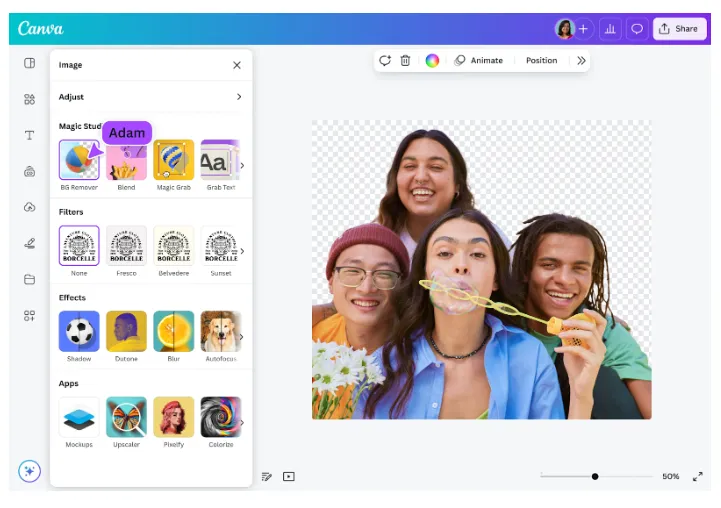
And here’s where it becomes truly practical Canva’s ability to perform quick visual edits like photo ka background change has allowed creators to focus on storytelling rather than technical editing. Imagine you’re designing a sleek landing page or an ad for your brand. With one click, you can remove distractions, isolate the product, and use negative space strategically to achieve that clean, minimalist aesthetic.
Example 1: A Delhi-based digital creator uses Canva to design cinematic Instagram Reels for a fashion brand. Instead of complicated software, she uses Canva’s background removal feature to isolate outfits, add subtle motion overlays, and produce minimalist but visually stunning short-form videos that drive engagement.
Canva’s ease of use means the design process feels fluid just like the visuals it helps create.
Example 2: Brands That Embrace Minimalism in Motion
Some of the most successful digital campaigns in recent years have embraced this balanced design philosophy:
- Airbnb’s 2024 “Host Stories” campaign used soft, pastel visuals and calm pacing to evoke warmth and simplicity while animating small design elements that guided viewers through real stories.
- Zomato’s micro-animations like bouncing icons or slowly transitioning food imagery show how minimalist motion can be playful without feeling overdone.
- Unacademy’s digital classroom experience integrates subtle transitions in lesson slides and video intros, proving that minimal design and gentle motion can make learning feel cinematic rather than mechanical.
All of these examples reflect the same trend: design is shifting from decorative to emotional. It’s no longer about showing off design skills; it’s about how the user feels when they interact with it.
The Psychology Behind Simple Motion
Why does minimalism paired with motion feel so effective? The answer lies in human psychology. The brain is drawn to order but stimulated by novelty.
Minimalist layouts provide order and they calm the visual noise. Motion introduces novelty; it rewards the brain for paying attention. Together, they create a loop of satisfaction: viewers feel both comfortable and curious.
This combination has become the foundation of visual engagement in modern UX and content design. Whether it’s an animated banner ad, a brand’s video opener, or even a mobile interface, users subconsciously favor designs that balance simplicity with liveliness.
Example 3: A content studio in Bengaluru redesigned its website using this principle. The site features a minimal interface, muted color palette, and slow parallax effects that move as users scroll. The result? Lower bounce rates and longer session times proof that restrained motion keeps visitors engaged without overwhelming them.
Designing for a Short-Form World
Short-form content like Instagram Reels, YouTube Shorts, and TikTok has forced designers to rethink attention economics. When you have just five seconds to make an impression, visual design must be intuitive.
This is where minimalism and motion converge perfectly. The visual clarity of minimalism ensures instant understanding, while the motion adds energy to retain attention.
Creators who master this balance stand out in a sea of overdesigned, overstimulated content. A simple color background, clean typography, and a single motion effect can often outperform a busy, effect-heavy video. Canva’s template-driven approach enables this precision, allowing even beginners to design videos that look intentional, polished, and modern.
The Future: Authenticity in Design
As 2025 progresses, the next chapter of digital design won’t just be minimal and dynamic it will be authentic. Audiences are tired of overproduction. They crave human energy behind every visual.
Modern designers are now blending handcrafted imperfections with digital precision using textures, asymmetry, and storytelling to make their visuals feel real. Canva, for instance, enables creators to experiment freely: blending minimalist backdrops with hand-drawn elements, animated stickers, and, yes, quick edits like photo ka background change to keep designs simple but expressive.
Design in 2025 is less about perfection and more about presence.
Conclusion
Minimalism and motion may seem like opposites one calm and quiet, the other dynamic and loud. But together, they’ve become the yin and yang of modern design. This union is redefining visual storytelling across every screen, scroll, and social feed.
Designers today aren’t chasing complexity; they’re chasing clarity. And in a world overflowing with content, the smartest creators are learning that simplicity isn’t just a style, it’s a strategy.
Tools like Canva have made it possible for anyone, from a college student to a design agency, to create with purpose. Whether it’s removing distractions with photo ka background change or adding micro-animations to a social post, the power to create modern, emotionally resonant design is now just a few clicks away.
In the end, the new rules of digital design aren’t written in code or color theory, they’re written in how we make people feel. And in 2025, that feeling comes from design that moves not just on the screen, but in the mind.