
Great sublimation printing is not about the printer alone. The supplies you use determine the final result as much as the machine does. Cheap ink produces dull colours. Wrong paper causes ghosting. Incorrect substrates waste time and money. If you are serious about building a print business, getting your sublimation supplies australia sourcing right from day one is the most practical investment you can make. This article covers every key supply category, what to look for, and what to avoid.
Why Does Sublimation Ink Quality Change Everything?
Sublimation ink quality directly controls colour vibrancy, wash durability, and print head longevity. Premium ink uses dye particles that are ground to a finer, more consistent size. This means smoother gradients, sharper edges, and more reliable colour-to-colour consistency across a print run. Cheap generic inks often have inconsistent particle sizes that clog print heads. Print head replacement on a mid-range sublimation printer costs $150 to $400. One head failure caused by bad ink wipes out any saving from buying cheaper ink. Source ink from brands that publish full chemical safety data sheets and match your printer model.
What Makes Transfer Paper So Critical to the Process?
Transfer paper is the intermediary between your printer and your substrate. It receives the ink from the printer and then releases it onto the substrate under heat. Poorly coated paper releases ink unevenly, causing blotchy or blurred prints. It can also stick to the substrate under heat, tearing when peeled and ruining the product. Good sublimation paper has a coating that holds ink until heat releases it cleanly and completely. The gsm weight matters too. Heavier paper at 90 to 120 gsm tends to handle ink saturation better for photographic and heavily detailed prints.
Which Substrates Produce the Best Sublimation Results?
The substrate determines the colour outcome. Polyester fabric at 100% content gives the most vibrant results because the dye fully embeds into the fibre. Drop below 65% polyester and colour starts washing out. White or light-coloured substrates produce accurate colours. Dark substrates cannot be sublimated because the dye is transparent and the dark base colour shows through. Polymer-coated hard substrates like mugs, aluminium prints, and ceramic tiles give sharp, photo-quality results. Check that coatings are rated for sublimation specifically, not just heat transfer.
How Does Your Heat Press Affect Print Quality?
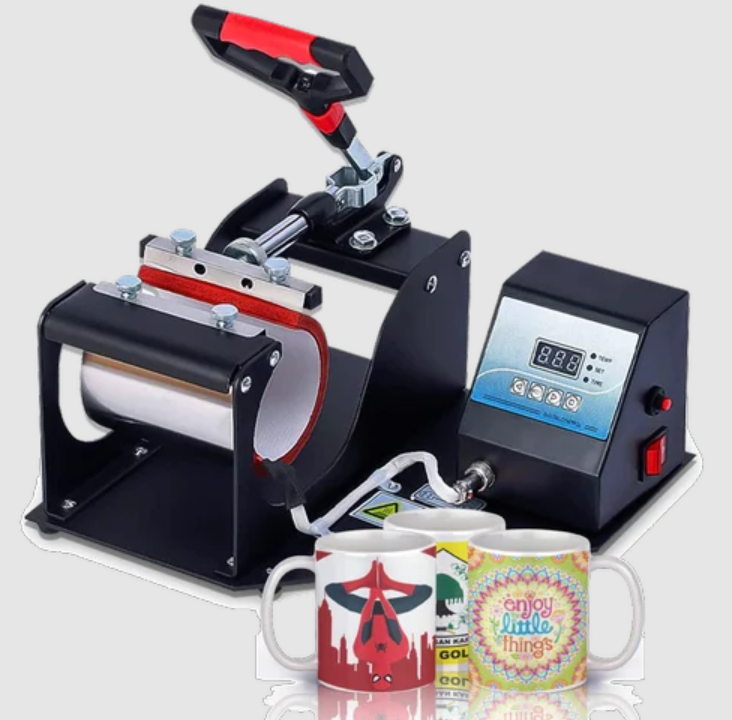
The heat press controls three variables: temperature, pressure, and dwell time. All three must be correct for a clean transfer. Most sublimation transfers require 180 to 205 degrees Celsius, 30 to 60 seconds, and medium to firm pressure. A heat press with uneven platen temperature will produce inconsistent results across the print area. Cheap presses often have hot spots or cold spots. Invest in a press with a temperature variance of no more than plus or minus 5 degrees Celsius across the platen. Check this with an infrared thermometer before you start production.
What Accessories Do You Need That People Forget?
Heat-resistant tape is essential. It holds the transfer paper in position during pressing so the print does not shift. Even a 1mm shift causes ghosting, which ruins the print. Silicone protection sheets go between the heat press platen and the substrate to distribute pressure evenly and protect sensitive surfaces. Protective paper is used as a blowout sheet to catch ink that migrates beyond the transfer area. Lint rollers clean substrates before pressing because dust and fibres under the transfer create visible spots in the finished print. None of these are expensive, but each one matters.
How Do You Store Sublimation Supplies Correctly?
Sublimation ink degrades in direct sunlight and in temperatures above 30 degrees Celsius. Store ink cartridges or bottles in a cool, dark location. Extreme heat separates the dye particles and causes inconsistent colour output. Transfer paper must be stored flat and away from moisture. Paper that absorbs humidity causes ink to spread during pressing, blurring fine details. Substrates with polymer coatings should be stored with their protective film on until you are ready to print. Dust on a coating before pressing creates visible imperfections in the final product.
Where Is the Smartest Place to Source Supplies in Australia?
Buy from a supplier who holds local stock. International shipping for consumables adds lead time that kills production schedules. A supplier who stocks the ink, paper, and substrates you use regularly means you can reorder and receive within two to three business days. Check whether the supplier provides technical support. When a print quality problem occurs, having someone local who understands your specific setup is worth more than a fractional discount from an overseas reseller. Consistency in supply chain means consistency in print quality.