
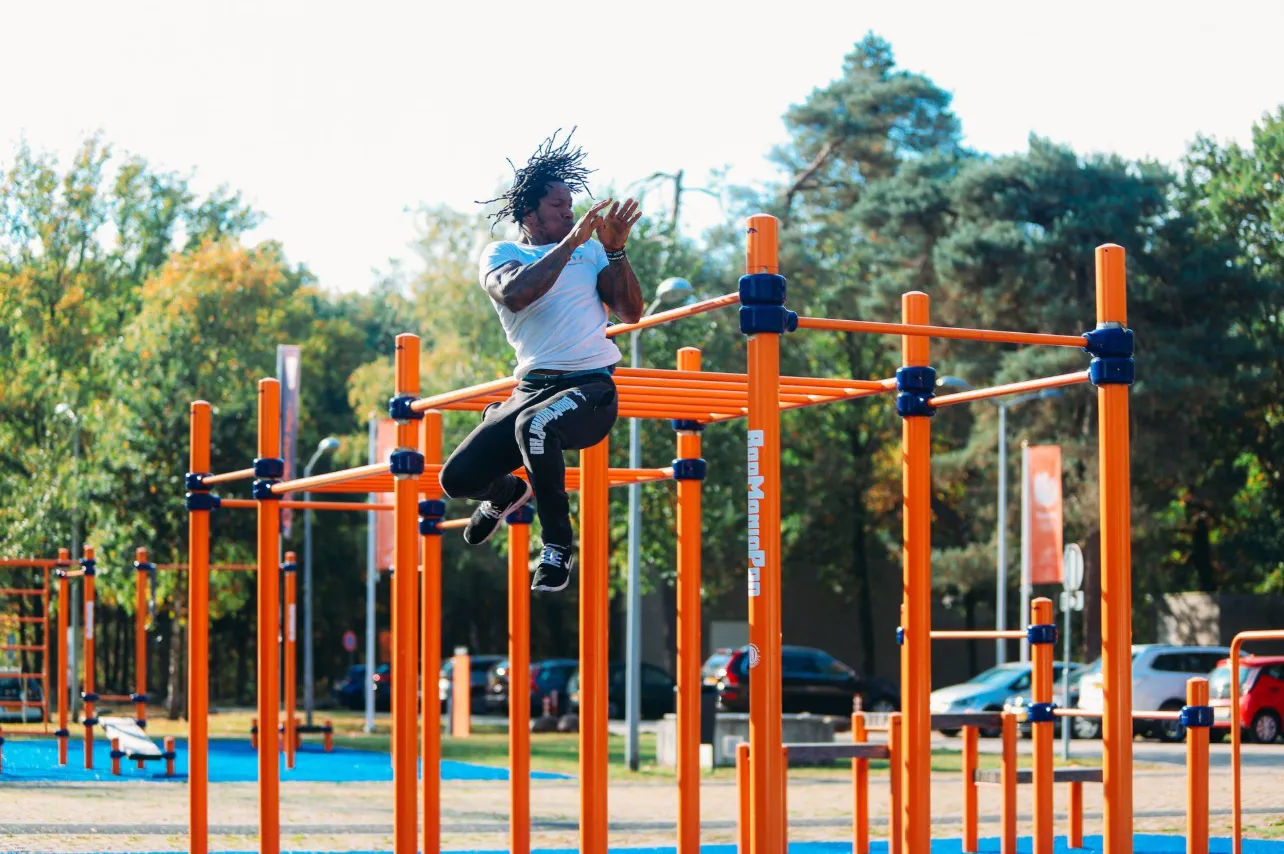
Public fitness infrastructure in Australia is growing fast. The Australian Institute of Health and Welfare reports that 55% of adults do not meet weekly physical activity guidelines. Outdoor gyms are one of the cheapest ways to close that gap. But cheap equipment creates cheap results. Calisthenics park equipment by UrbanFit is built specifically for the demands of public outdoor use, not just the aesthetics of it.
What Is Calisthenics and Why Does It Work Outside?
Calisthenics uses bodyweight as resistance. Pull-ups, dips, push-ups, leg raises, and jumps. No weights required. No electricity. No gym membership. That is why it translates perfectly to public parks.
A 2022 meta-analysis in the Journal of Strength and Conditioning Research reviewed 23 studies on calisthenics training. It found comparable strength and hypertrophy outcomes to resistance machine training over a 12-week period. The outdoor environment costs nothing extra to deliver this.
UrbanFit’s calisthenics range includes pull-up bars at multiple grip widths, dip stations, parallel bars, and incline push-up stations. These are not decorative. They target specific muscle groups with purpose-designed geometry.
What Makes UrbanFit Equipment Different from Generic Gym Structures?
Generic outdoor gym structures often fail on two counts. Load capacity and grip surface. A pull-up bar rated for 100kg is fine for the average user but fails immediately for a heavier user or dynamic movement.
UrbanFit rates their structural load at 150kg static and 120kg dynamic. Dynamic loading accounts for the force generated during kipping pull-ups and jumping movements. That is where most cheap structures crack at welds.
Grip texture on UrbanFit bars uses a cold-rolled steel finish with a diamond knurl pattern. It maintains grip in wet conditions. Smooth bars become dangerous when wet. This is a non-negotiable design requirement for outdoor equipment.
Is Calisthenics Equipment Suitable for All Fitness Levels?
This is the most important design question. Beginners cannot do pull-ups. If the equipment only supports advanced movements, it gets used by 10% of the population and ignored by the rest.
UrbanFit includes low horizontal bars for inverted rows, angled push-up handles at three heights, and balance beams for lower-body work. Beginners have entry points. The equipment scales with the user.
Councils that installed multi-level calisthenics rigs from UrbanFit in 2021 across Greater Sydney reported a 38% increase in park visits within six months, measured by footfall counters installed at park entrances.
How Does UrbanFit Handle the Harsh Outdoor Environment?
316-grade marine stainless steel is used at all connection points and exposed hardware. 316 is the gold standard for coastal and humid environments. It resists chloride corrosion, which is the main failure mechanism in seaside parks.
The structural posts use hot-dip galvanisation at 85 microns. That exceeds the AS/NZS 4680 standard minimum of 45 microns. It adds cost. It adds 20 years to the lifespan.
UrbanFit also anchors all structures in concrete footings with a minimum depth of 600mm. Shallow footings allow rocking, which fatigues welds over time. That is the single most common failure point in public outdoor gym equipment globally.
What Should Councils Consider Before Installing Calisthenics Equipment?
Site selection matters more than product selection. East-facing installations get morning use. West-facing installations bake in afternoon sun and are avoided in summer. Shade either exists naturally or needs to be built in.
User demographics shape the equipment mix. Parks near universities need advanced equipment. Parks near aged care facilities need low-intensity mobility stations. UrbanFit provides site assessment consultations before every council installation.
Surfacing under equipment is the most overlooked cost. Compacted granite, rubber mulch, or poured rubber all have different maintenance requirements. UrbanFit recommends poured rubber for calisthenics areas due to its slip resistance and longevity.