
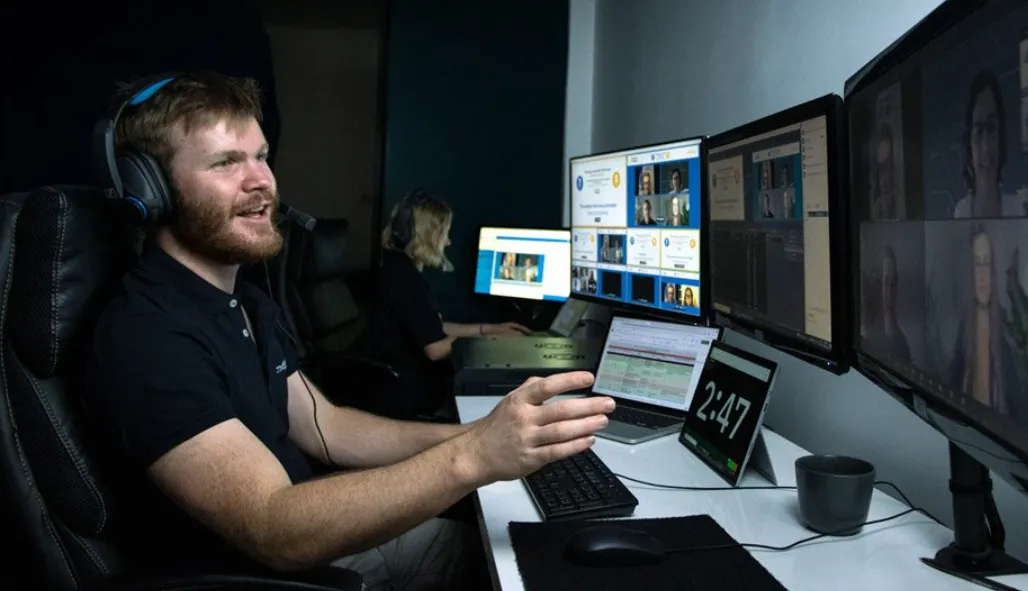
Hiring a virtual event production company is not about convenience. It is about control. Virtual events today are no longer experiments. They are revenue drivers. They are brand moments. They are strategic touchpoints that live far beyond a single live stream. When done right, virtual events feel effortless. When done poorly, they fall apart fast.
This article explains what truly goes into professional virtual event execution, how production teams operate behind the scenes, and why strategy matters more than software.
No filler. Just reality.
Virtual Events Are Broadcasts, Not Meetings
A virtual event is not a call.
It is a live broadcast.
That distinction matters.
Broadcasts require:
- Direction
- Timing
- Technical control
- Redundancy
- Audience management
Meetings tolerate mistakes.
Broadcasts do not.
Strategy Comes Before Technology
Technology does not create clarity.
Strategy does.
Professional teams begin with documentation.
That documentation answers:
- Who is attending?
- Why are they attending?
- What problem does this event solve?
- What action should attendees take next?
- How will success be measured?
A clear strategy prevents wasted production.
An unclear strategy wastes money.
Event Type Determines Production Complexity
Not all virtual events are equal.
Different formats require different builds.
Examples include:
- Marketing webinars
- Product launches
- Sales enablement events
- Internal town halls
- Customer training
- Investor updates
- Multi-day conferences
Each format affects:
- Crew size
- Technology stack
- Run-of-show structure
- Rehearsal time
- Engagement planning
Treating all events the same guarantees failure.
The Run of Show Is the Master Document
Every professional virtual event runs on a run of show.
This is not optional.
This document includes:
- Exact timestamps
- Speaker cues
- Camera switches
- Video roll-ins
- Graphic triggers
- Poll launches
- Q&A segments
- Buffer time
Everyone follows the same script.
No improvisation.
No confusion.
Audio Is the Highest Priority
Audio problems kill events faster than anything else.
People will forgive blurry video.
People will not forgive broken sound.
Professional audio management includes:
- Broadcast-grade microphones
- Audio level monitoring
- Noise suppression
- Echo control
- Backup audio feeds
Audio is checked before rehearsals.
Audio is checked again before going live.
Video Quality Shapes Brand Perception
Video quality communicates effort.
Effort communicates value.
Professional teams control video through:
- Camera framing standards
- Lighting guidelines
- Color consistency
- Branded overlays
- Background control
Every speaker looks intentional.
Nothing looks accidental.
Lighting Separates Amateur From Professional
Lighting is not decoration.
Lighting is a function.
Good lighting:
- Eliminates shadows
- Highlights facial expressions
- Improves camera clarity
- Keeps viewers engaged
Bad lighting makes speakers look tired and unprepared.
Professional teams fix lighting before the event starts.
Speakers Need More Than Talking Points
Great speakers still need coaching.
On-camera delivery is a skill.
Production teams coach speakers on:
- Camera eye line
- Speaking pace
- Slide timing
- Body language
- Microphone placement
Prepared speakers hold attention.
Unprepared speakers lose it.
Engagement Must Be Engineered
Virtual audiences multitask.
Engagement keeps them present.
Effective engagement tools include:
- Live polls
- Moderated Q&A
- Chat prompts
- On-screen reactions
- Breakout sessions
Engagement is planned into the agenda.
It is never an afterthought.
Moderators Control the Experience
Moderators are essential.
They:
- Introduce speakers
- Manage time
- Filter questions
- Handle transitions
- Maintain momentum
Without a moderator, events feel awkward.
With a moderator, events feel polished.
Technical Direction Runs the Show
A technical director operates behind the scenes.
This role includes:
- Switching camera feeds
- Launching graphics
- Rolling video assets
- Monitoring streams
- Managing delays
Technical directors follow the run of show precisely.
They do not guess.
They execute.
Redundancy Prevents Public Failure
Technology fails.
Professional teams expect that.
Redundancy includes:
- Backup internet connections
- Duplicate streaming paths
- Secondary audio sources
- Extra hardware
- Standby presenters
If one system fails, another takes over instantly.
Viewers never notice.
Platform Choice Is a Strategic Decision
Platforms are not interchangeable.
Selection depends on:
- Audience size
- Security needs
- Engagement features
- Branding control
- Analytics depth
Wrong platforms limit experience.
Right platforms disappear into the background.
Branding Must Be Consistent
Virtual events are brand moments.
Branding includes:
- Waiting room visuals
- Lower thirds
- Slide templates
- Color palettes
- Logo placement
Consistency builds trust.
Inconsistency signals carelessness.
Accessibility Is Non-Negotiable
Accessibility improves outcomes.
Professional events include:
- Live captions
- Transcripts
- High-contrast visuals
- Clear fonts
- Screen reader compatibility
Accessible events reach wider audiences.
They also perform better.
Security Protects Trust
Virtual events attract bad actors.
Security measures include:
- Registration gating
- Password protection
- Moderator permissions
- Controlled screen sharing
- Stream access limits
Security planning protects reputation.
Rehearsals Reduce Risk
Rehearsals expose problems early.
Professional rehearsals include:
- Full tech runs
- Speaker walkthroughs
- Timing validation
- Engagement testing
- Backup system checks
No rehearsal equals unnecessary risk.
Analytics Reveal the Truth
Virtual events generate data.
That data matters.
Track metrics like:
- Attendance rate
- Average watch time
- Engagement participation
- Drop-off points
- Geographic reach
- Conversion actions
Data informs future strategy.
Guessing does not.
Post-Event Execution Extends ROI
The event does not end when the stream ends.
Post-event actions include:
- On-demand access
- Follow-up emails
- Resource downloads
- Surveys
- Sales enablement
- Internal reporting
Follow-up multiplies impact.
Skipping follow-up wastes effort.
Common Mistakes That Undermine Virtual Events
Avoid these failures:
Unclear objectives
Events without purpose feel hollow.
Overloaded agendas
Too much content overwhelms viewers.
Ignoring rehearsals
Practice prevents public mistakes.
Weak engagement planning
Passive viewers leave early.
No backup systems
Single points of failure cause disasters.
Professional teams avoid these mistakes by design.
Why Professional Production Matters
Virtual events are not forgiving.
Audiences compare experiences instantly.
Professional teams bring:
- Proven workflows
- Skilled operators
- Tested systems
- Calm execution
- Predictable results
DIY approaches break under pressure.
Final Thoughts
Virtual events are permanent tools.
They support:
- Marketing
- Sales
- Training
- Internal communication
- Brand building
Success requires:
- Clear strategy
- Technical discipline
- Audience focus
- Professional execution
If quality matters, shortcuts fail.
That is why organizations rely on a trusted virtual event production company to design, manage, and execute experiences that work.