
If you or a loved one is struggling with emotional regulation, self-harm, suicidal ideation, or intense interpersonal conflict, you may benefit from DBT—a powerful and evidence-based therapeutic approach that has helped thousands of individuals regain control over their emotions and lives.
Dialectical Behavior Therapy, commonly known as DBT, is a modified form of cognitive-behavioral therapy originally developed in the 1980s by Dr. Marsha Linehan. While it was initially designed to treat borderline personality disorder (BPD), DBT is now widely used for a range of mental health conditions, including depression, anxiety, post-traumatic stress disorder (PTSD), substance use disorders, and eating disorders.
In this blog, we’ll explore the principles, techniques, benefits, and real-world applications of DBT—and why it’s increasingly being offered by top mental health professionals across the country.
What is DBT?
Dialectical Behavior Therapy is centered around the concept of “dialectics,” which means synthesizing opposing ideas. In DBT, the core dialectic is acceptance and change. Therapists help clients accept their current reality while simultaneously working on strategies to change harmful behaviors.
DBT integrates standard cognitive-behavioral techniques for emotional regulation and reality testing with concepts of distress tolerance, acceptance, and mindful awareness largely derived from Buddhist meditative practice.
The Four Core Modules of DBT
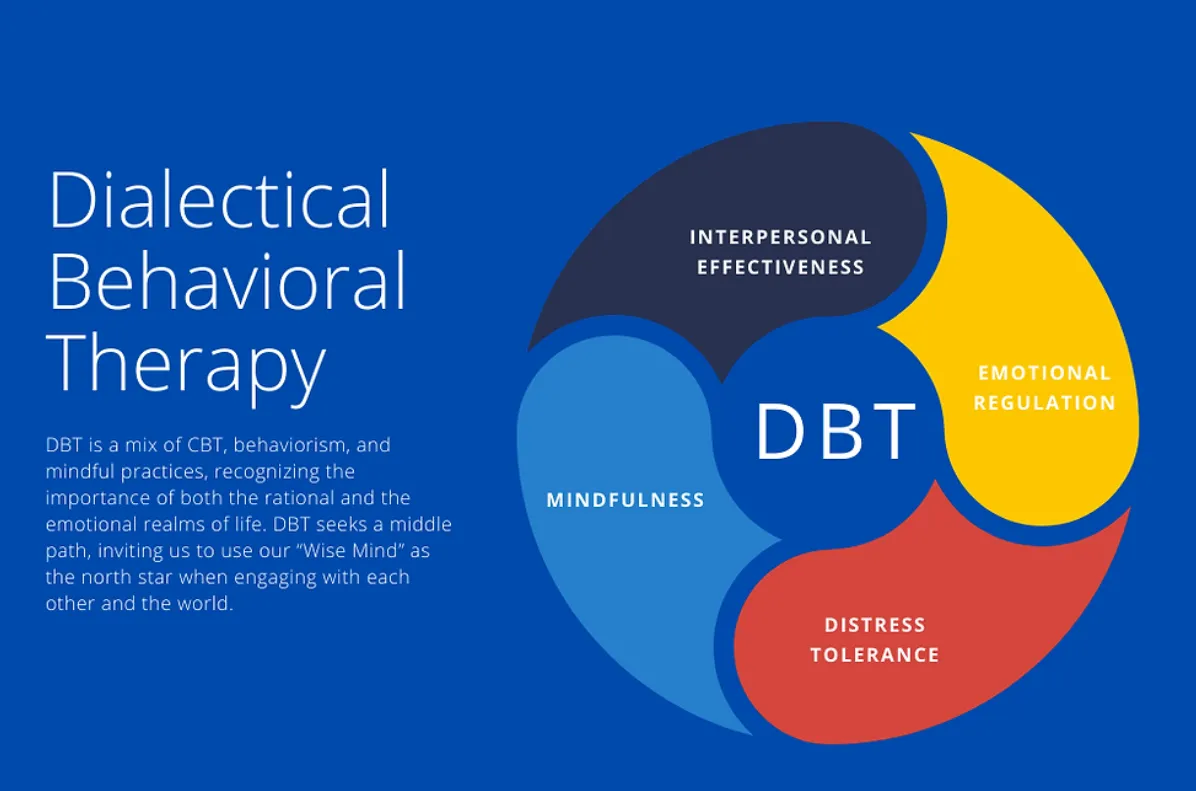
DBT is organized into four skill modules that target specific areas of functioning. These modules are:
1. Mindfulness
Mindfulness is the foundation of all DBT skills. It involves being fully present in the moment and observing one’s thoughts, feelings, and surroundings without judgment. Clients learn to recognize automatic patterns and begin responding with intention rather than impulsivity.
Key Techniques:
- Observing and describing experiences non-judgmentally
- Practicing radical acceptance
- Grounding exercises to combat dissociation or anxiety
2. Distress Tolerance
This module teaches individuals how to manage crises without resorting to self-destructive behaviors. The emphasis is on survival strategies rather than solving the issue in the heat of the moment.
Key Techniques:
- Distraction techniques (ACCEPTS)
- Self-soothing using the five senses
- Crisis survival strategies
- Improving the moment (IMPROVE)
3. Emotion Regulation
Emotion regulation skills help clients identify, understand, and change intense emotional responses that are not helpful or are destructive. Individuals learn how to reduce vulnerability to emotional mind states.
Key Techniques:
- Identifying and labeling emotions
- Increasing positive emotional events
- Opposite action
- Reducing emotional vulnerability (ABC PLEASE)
4. Interpersonal Effectiveness
This module equips clients with the tools to navigate relationships more effectively. It focuses on assertiveness, boundary-setting, and improving communication while maintaining self-respect.
Key Techniques:
- DEAR MAN (for assertiveness)
- GIVE (for relationships)
- FAST (for self-respect)
Who Benefits from DBT?
While DBT was initially developed for individuals with borderline personality disorder, its applications have significantly expanded. Today, it is effectively used for:
- Self-harming behaviors
- Suicidal ideation and attempts
- Chronic depression and anxiety
- Substance use disorders
- Eating disorders such as bulimia and binge-eating
- Post-Traumatic Stress Disorder (PTSD)
- Emotionally intense individuals or those with high sensitivity
In short, anyone struggling with emotional dysregulation or destructive behavior patterns may benefit from DBT.
How DBT Works in Practice?
A full DBT program typically includes:
- Individual Therapy Sessions: Clients meet one-on-one with a DBT-trained therapist to work on personal behavioral issues and apply DBT techniques in real-life scenarios.
- Group Skills Training: This is a classroom-like setting where clients learn and practice the four modules of DBT.
- Phone Coaching: Clients can reach out to therapists for real-time guidance in managing crises using DBT skills.
- Therapist Consultation Team: DBT therapists participate in their own supervision and support group to ensure they are delivering effective treatment.
The standard DBT program runs for approximately 6 months to a year, depending on the individual’s progress and needs.
The Evidence Behind DBT
DBT is one of the most researched psychotherapies for borderline personality disorder and suicidal behavior. Clinical trials have consistently shown that DBT is effective in reducing:
- Suicidal behavior
- Non-suicidal self-injury
- Hospitalizations
- Depression and anxiety symptoms
- Substance abuse
Moreover, individuals undergoing DBT often report improvements in interpersonal relationships, emotional resilience, and overall quality of life.
Real-Life Success Stories
Many individuals who have gone through DBT describe it as life-saving. Consider Jessica, a 27-year-old who struggled with self-injury and unstable relationships for years. After completing a full DBT program, she reports not only a reduction in self-harm but also improved confidence, better job performance, and a stronger sense of identity.
Another case, Mark, age 35, battled with severe anxiety and alcoholism. Traditional therapy failed him multiple times. However, DBT helped him regulate his emotions, develop healthier coping mechanisms, and ultimately achieve sobriety.
These stories are not unique—hundreds of mental health treatment centers nationwide now offer DBT programs because of these transformative outcomes.
Finding a Qualified DBT Provider
When seeking DBT, it’s essential to ensure that the provider or treatment center offers comprehensive DBT rather than “DBT-informed” care. Comprehensive DBT includes all four components mentioned earlier—individual therapy, skills group, coaching, and consultation team.
What to look for:
- Therapists certified by the Linehan Board of Certification (DBT-LBC)
- Centers offering full DBT programs, not just skills training
- Access to emergency coaching support
- Evidence-based curriculum and materials
Lone Star Mental Health is an example of a provider that delivers evidence-based DBT programs tailored to the individual’s needs and diagnosis. Their compassionate and trained staff helps clients achieve lasting recovery by addressing the root emotional and behavioral issues that often fuel addiction or instability.
Integrating DBT into a Broader Treatment Plan
DBT often works best as part of a comprehensive treatment plan that includes:
- Medication management
- Psychiatric evaluation
- Family therapy
- Nutritional support
- Holistic therapies (yoga, meditation, exercise)
Especially in addiction recovery, integrating DBT with other therapeutic approaches can provide a more robust and sustainable path to wellness.
Final Thoughts!!
DBT stands out as one of the most effective therapies for individuals struggling with emotional dysregulation, impulsivity, and high-risk behaviors. With its emphasis on mindfulness, distress tolerance, emotion regulation, and interpersonal effectiveness, DBT empowers individuals to build lives worth living.
If you or someone you love could benefit from structured, compassionate support, don’t hesitate to learn more about DBT and how it can transform mental health outcomes.