
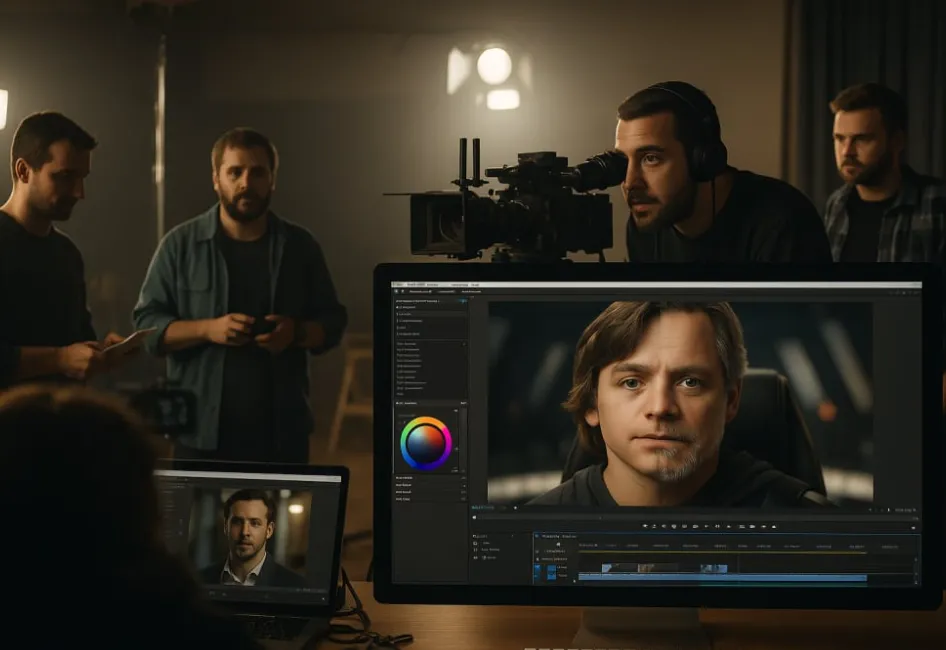
Driven by fresh technologies that simplify production, elevate storytelling, and increase cost efficiency, the movie business is always changing. One of the most current developments in the field is face swap video capability driven by artificial intelligence. First made famous for entertainment and social networking applications, this AI-based invention is now viewed by movie directors as a cost-cutting tool. But what limitations exist and how precisely may face swap video applications help lower production expenses?
What exactly is Artificial Intelligence Face Swap Video Technology?
Face swap video technology substitutes another person’s face in film material using sophisticated artificial intelligence algorithms. Using deep learning, the program links facial expressions, gestures, illumination, and angles to generate a very realistic swap. Using educated artificial intelligence models, what once required hours of CGI and post-production effort may now be completed in minutes.
Face-swapping used expert-grade editing teams and substantial budgetary distribution years ago. Low-budget productions may, however, use this technology thanks to AI-driven tools, therefore opening the door for cost-saving methods at nearly every level of filmmaking.
Replacing Reshoots and Stand-Ins
One of the biggest financial burdens in filmmaking is reshooting scenes. Whether due to actor availability, continuity errors, or last-minute changes, reshoots can add thousands—or even millions—to a production’s budget. With face swap video tools, filmmakers can digitally adjust or correct footage without requiring actors to return to set.
For example, if a stand-in or body double performs a scene, the actor’s face can be added later using face swap video technology. This eliminates the need to coordinate complex schedules or rebuild expensive sets. It also allows for flexibility during editing, making it easier to refine a scene without incurring additional filming costs.
De-Aging and Character Consistency
De-aging or older characters is yet another field in which face swap video proves useful. Filmmakers have traditionally used prosthetics or costly CGI to portray an actor as either older or younger. Nowadays, more cheaply, AI-driven face swapping can complete this digitally.
In long-running franchises where character consistency is paramount, this technology lets filmmakers keep visual continuity even if an actor is not present. Scenes needing a younger version of a character, for instance, can be made by changing an older actor’s face onto a younger double, therefore keeping the character’s identity while lowering the reliance on pricey digital effects.
Creating International Versions
Face swap video technology might also assist in producing several copies of a movie for various regions. Many times, international movies need regional editions; dubbing alone does not always ensure a smooth viewing experience. Using face-swapping artificial intelligence, studios can link lip motions with translated speech to give foreign releases a more natural feel.
Rather than filming the same scenes with various actors or trying to synchronize translated sound, filmmakers can just produce variations in which an actor’s lips and face motions are suited to the destination language. This increases international market appeal while also saves money and time.
Constraints and Factors to Consider
Although it shows promise, face swap video technology is not free of restrictions. Although the results are getting more and more lifelike, the technology is still challenging in some cases—such as intense lighting, strange facial angles, or elaborate facial hair. Furthermore, getting the finest results often depends on sharp, high-resolution film.
There are also legal and ethical ramifications. Filmmakers must make certain that performers have clearly approved having their faces included in face swap video changes. Even with good intentions, unauthorized face-swapping could cause legal problems or reputational damage.
Cost-Effective Film Making in Future
Face swap video tools are likely to become a regular part of the filmmaking process as artificial intelligence grows. This technology is appealing to both high-budget studios and indie filmmakers since it helps them to save time, cut manufacturing expenses, and keep artistic control.
We could see in the future wholly AI-assisted productions in which performers wear motion capture suits and their ultimate looks are created digitally using face swap video methods. This opens up artistic opportunities that were once constrained by physical restrictions in addition to reducing logistical difficulties.
Conclusion
Finally, AI-powered face swap video technology presents filmmakers with a game-changing chance to save money without compromising quality. Whether it’s avoiding reshoots, creating de-aged characters, or localizing content for global audiences, face-swapping is proving to be more than just a trend; it is a practical, cost-effective solution shaping the future of cinema.